
Key Takeaways
Tasmania can suit a range of backpacking budgets, but transport and accommodation choices shape the total more than any single daily expense. A flexible route, simple meals and a little room for changes can make planning easier.
- Compare transport options against the places on the route, not just the headline fare or hire cost.
- Set aside money for arrival, departure and changes to the itinerary.
- Check accommodation location and kitchen access as well as the nightly rate.
- Group nearby stops to reduce backtracking and make better use of travel days.
- Confirm current park fees and seasonal conditions before setting out.
Plan a realistic backpacking budget
A useful Tasmania budget starts with the shape of the trip: how long it lasts, how the traveller will move around and where they plan to sleep. Costs can shift with season and availability, so it helps to build an estimate from the itinerary rather than rely on a single daily figure. The aim is a plan that can absorb ordinary changes without turning every decision into a calculation.
Estimate daily costs by travel style
A traveller using shared rooms and public transport will have a different spending pattern from someone hiring a vehicle and camping. Instead of treating one daily estimate as universal, list the main costs for each day and note which ones are fixed, optional or shared. Start with the big choices—transport and accommodation—then add food, activities and everyday needs.
This simple comparison can help make the assumptions visible before the trip begins:
| Travel style | Costs to plan for | What may change the estimate |
|---|---|---|
| Hostel-based | Bed, meals, transport, activities | Room availability and location |
| Camping | Campsite, equipment, food, transport | Gear needs and access to facilities |
| Vehicle-based | Hire, fuel, insurance, accommodation | Hire terms, route and vehicle size |
These are planning categories, not price quotes. A traveller can use them to compare a few realistic versions of the same trip and see which trade-offs matter most.
Set aside money for arrival and departure
Arrival and departure can involve costs that do not fit neatly into a typical day, such as getting to or from a terminal, arranging a first night’s stay or allowing extra time for a connection. Listing those costs separately prevents them from disappearing inside the day-to-day estimate. It also helps clarify how much of the itinerary is available for exploring.
Build a buffer for changing plans and unexpected expenses
Tasmania plans may need to shift when weather, availability or transport timing changes. A buffer gives the itinerary some breathing room for an extra night, a different connection or an activity that becomes appealing once the traveller arrives. It need not be tied to a precise prediction; the useful step is keeping it separate from routine spending so the plan is not built right up to its limit.
Choose affordable ways to get around
Distances and travel time matter when comparing transport: the cheapest option on paper may not suit a route with spread-out stops. Buses, rental cars and campervans each involve different trade-offs in flexibility, shared costs and planning. Comparing the whole journey, rather than one fare or hire figure, gives a clearer picture of what may fit.
Compare buses, car rentals, and campervans
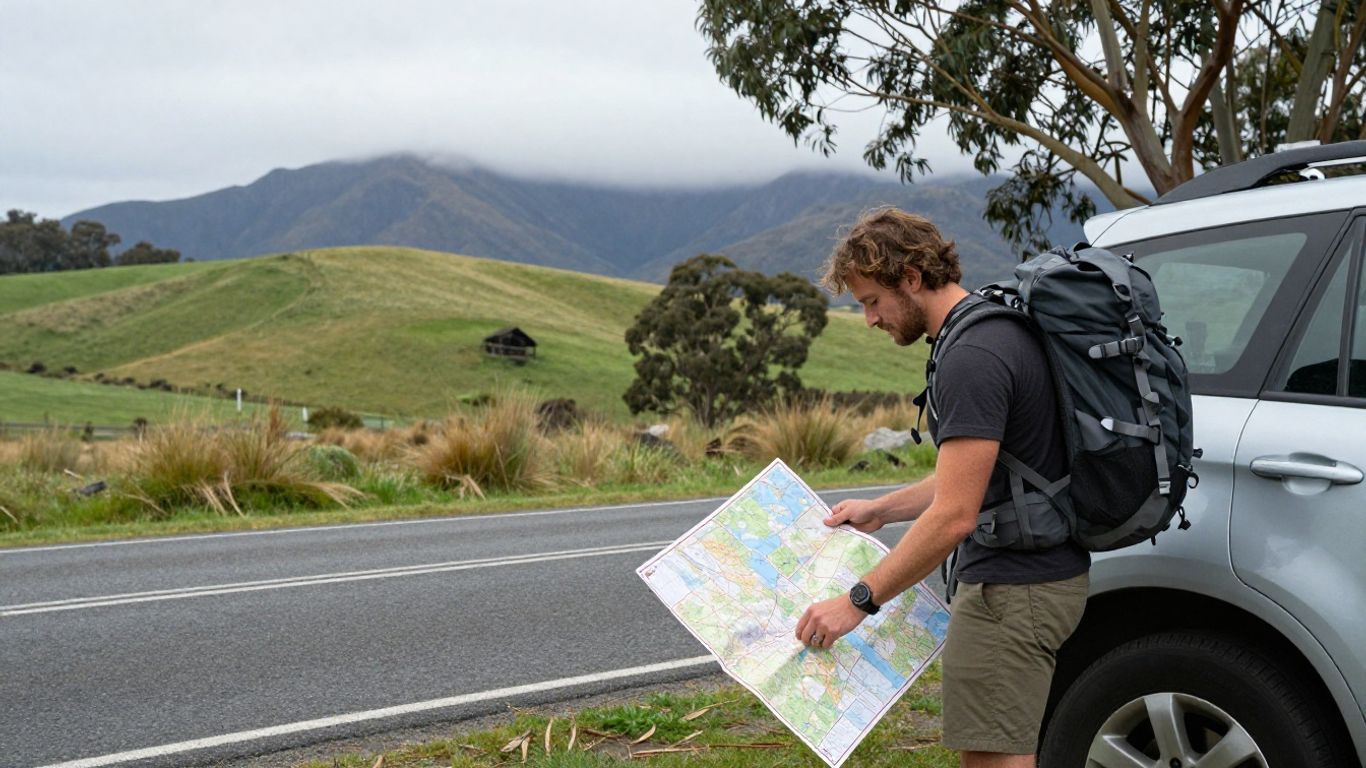
Bus travel can work for routes served by suitable services, while a rental car gives travellers more control over stops and timing. A campervan combines transport and sleeping arrangements, but its total cost depends on hire terms, fuel and where it can be parked overnight. For each option, check whether it reaches the planned destinations and how much time is needed between them.
Reduce transport costs with carpooling
Sharing a vehicle can spread some travel costs across several people, provided the group agrees on the route, timing and practical arrangements. Before setting off, travellers can clarify a few details together:
- Which destinations and stops are included?
- How will shared costs be tracked and settled?
- Who is driving, and what are the arrangements for breaks?
- What happens if someone wants to change the route?
A clear agreement makes it easier to compare a shared trip with travelling independently. It also helps avoid mismatched expectations once the group is on the road.
Account for fuel, insurance, and one-way fees
Vehicle comparisons are more useful when they include the costs beyond the base hire amount. Travellers can check fuel expectations for the intended route, what insurance is included and whether returning the vehicle somewhere different adds a fee. Reading the hire conditions before booking also helps reveal limits or charges that may affect the plan.
Find budget-friendly places to stay
Accommodation affects more than the nightly total: its location can change transport needs, and its facilities can influence food costs. A low-cost bed far from the planned stops may not be the cheapest choice overall. Comparing a few practical details alongside the rate makes it easier to choose a place that works for the route.
Compare hostels and shared rooms
Hostels and shared rooms can be useful options for travellers who are comfortable sharing space and facilities. Rates and room arrangements vary, so it is worth checking what is included, whether bedding is provided and how close the property is to transport or the day’s activities. A convenient location may save time and extra journeys.
Use campsites without overlooking equipment costs
Camping can suit a trip focused on outdoor stops, though campsite fees are only one part of the calculation. Travellers who do not already have suitable equipment should account for hiring or buying what they need, as well as the effort of carrying and storing it. It also helps to check what facilities are available at each site rather than assume they are the same everywhere.
Check kitchen access and location before booking
Kitchen access can make it easier to prepare simple meals, while a nearby supermarket or transport stop can make everyday logistics less complicated. Before booking, travellers can check the location against the planned route and confirm which facilities are actually available. Those details can make a modest room or campsite more practical than a cheaper option that requires extra trips.
Keep food and everyday expenses under control
Food and small daily purchases can be easy to overlook while attention is on transport and accommodation. A loose plan helps travellers leave room for meals out without relying on them for every meal. Keeping a few essentials in mind also makes long day trips and changes in routine less costly.
Shop at supermarkets and cook simple meals
Buying basic ingredients and cooking at a hostel or campsite kitchen can help keep meals straightforward. Travellers can plan a few flexible staples that work across several days, then choose a meal out when it suits the route or mood. Checking kitchen access before booking makes this approach more realistic.
Pack snacks and refillable water bottles for day trips
A day away from shops can make spontaneous food stops less convenient. Carrying snacks and a refillable bottle gives travellers a simple option between planned meals, especially on longer outings. They should check local conditions and available refill points rather than assume facilities will be close by.
Budget for laundry, mobile data, and other essentials
Laundry, mobile data and toiletries are small costs that still deserve a place in the plan. Travellers can estimate how often they expect to use laundry facilities and check what their mobile plan covers before leaving. Keeping these everyday needs visible helps prevent them from crowding out planned activities later in the trip.
Map out a low-cost Tasmania route
A route can shape the budget as much as the number of nights away. Fewer detours may mean less time and money spent getting between stops, while a slower pace can leave more space to explore each region. The best plan is the one that matches available time and transport rather than trying to include every well-known place.
Group nearby destinations to limit backtracking
Grouping stops by area can reduce repeated journeys and make travel days easier to manage. For example, a route might pair Hobart with nearby southern sights, then plan separate time for the east coast or the north rather than repeatedly crossing the island. A rough sequence is useful, but it should leave some flexibility for the actual transport connections.
A short regional outline can help show where a loop or one-way route makes sense:
- Hobart and nearby southern stops
- East-coast destinations such as Freycinet
- Launceston and northern stops
- Cradle Mountain or other western and central areas, if time allows
These groupings are a starting point, not a required itinerary. Travellers can choose fewer areas and spend longer in each, particularly when transport options make quick hops impractical.
Balance Hobart and Launceston with regional stops
Hobart and Launceston can each anchor a route, but regional stops often need more planning around transport and overnight stays. Travellers can decide which city best suits their arrival or departure, then add destinations that fit the direction of travel. Leaving out a distant stop can be a sensible choice if reaching it would add substantial backtracking.
Fit the itinerary to your time and transport options
The number of places on a route should reflect the days available and the transport schedule, not just the map. Travellers relying on buses may need a more carefully timed sequence, while people with a vehicle may have greater freedom to pause along the way. Checking connections and allowing time between regions can keep the itinerary from becoming a series of rushed transfers.
Budget for hikes, parks, and seasonal conditions
Outdoor experiences are a major reason many people travel to Tasmania, but costs and access can vary by activity and time of year. Some outings are free, while parks or other attractions may have fees or require advance planning. A little research before departure helps keep the route realistic and the right equipment in reach.
Check park passes and activity fees before you go
Travellers should check current park pass requirements and activity charges with the relevant official providers before setting out. Fees and conditions can change, and a pass may be handled differently from an individual activity. Confirming the details early makes it easier to include them in the trip estimate rather than discover them on arrival.
Prioritize free walks, beaches, and viewpoints
A trip can include memorable outdoor stops without filling every day with paid activities. Travellers can look for walks, beaches and viewpoints that fit their route, then reserve paid experiences for the places that matter most to them. Checking access, facilities and any local restrictions still matters, even when an outing has no entry charge.
Adjust gear and transport plans for changing weather
Weather can affect what is comfortable to carry and whether a planned walk or road journey remains suitable. Travellers can check local forecasts close to departure, pack layers and allow flexibility to rearrange outdoor days. A route with some alternatives is often easier to manage than one that depends on perfect conditions.
Frequently Asked Questions
How much does backpacking in Tasmania cost?
There is no single cost that suits every trip. The total depends on the length of stay, transport, accommodation, food and activities, so a useful estimate starts with those categories and the planned route.
What is the cheapest way to travel around Tasmania?
The lowest-cost option depends on where a traveller wants to go and how many people are sharing the journey. Comparing available bus routes with the full costs of a rental vehicle or shared travel can clarify which option fits the itinerary.
Is camping a good way to save money in Tasmania?
Camping may reduce accommodation costs for some travellers, but equipment, campsite fees and transport still need to be considered. It works best when the route and available facilities suit the traveller’s needs.
Are hostels available in Tasmania?
Hostels and shared rooms are options in some places, but availability, facilities and location vary. Checking the details for each stop before booking can help match accommodation to the route.
How many days are needed to visit Tasmania on a budget?
The right trip length depends on which regions a traveller wants to see and how they plan to move between them. A shorter route focused on fewer areas can be more practical than trying to cover the whole island quickly.
Do travellers need a park pass in Tasmania?
Some parks or activities may involve fees or pass requirements. Travellers should check current conditions with official providers before visiting, as requirements can vary.
What should travellers pack for Tasmania’s changing weather?
A flexible set of layers and weather-appropriate outerwear can help with changing conditions. Travellers should check the local forecast for their planned areas and adjust clothing and activity plans accordingly.